
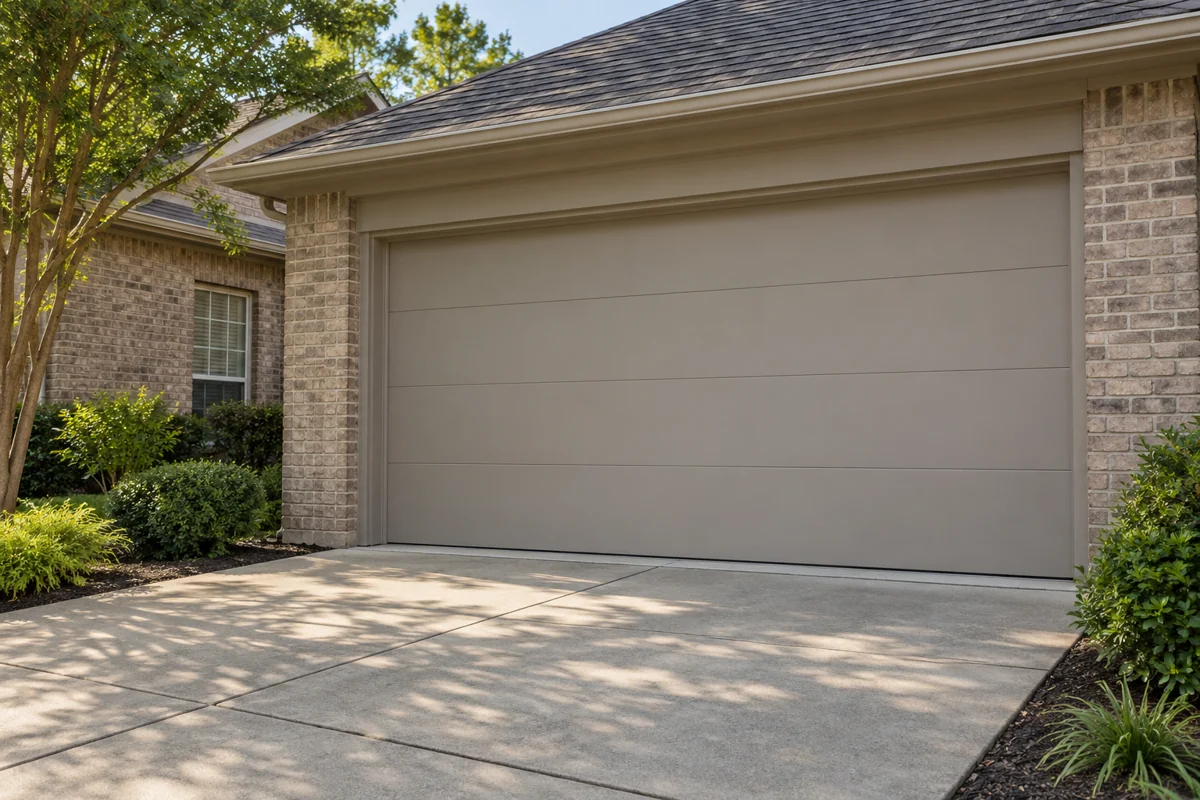
Leave a stopped door alone
Do not stand or walk beneath a door that is stuck partly open. Keep children and pets away, and avoid repeatedly operating a door that moves unevenly or makes an unfamiliar noise. Springs, cables and other loaded parts are not a place for improvised adjustments.
Say whether a vehicle is inside and whether another safe entrance works. If you cannot use the garage, explain the access problem without trying to force movement. Any proposed next step should account for the door's actual position and condition.
Describe the door and the controls
Useful details include whether the door stays fully closed, stops partway or appears uneven. Mention what happens when you use the ordinary control and whether the symptom is new. If you know the door or opener details, have them available, but do not climb into an unsafe position to find a label.
A working house key with a stationary garage door is different from a key that will not turn in the door between the garage and house. Our house key or garage problem guide helps separate those requests. The correct description avoids treating every access problem as a garage mechanism fault.
Confirm the repair request
Explain the property address, who can authorize the work and any access instructions. A home near Briarwood Park on West Belt Line still needs its own full address; a neighborhood landmark is only a way to orient the conversation. Do not assume every nearby home has the same garage arrangement.
Ask which assessment is available for the particular equipment, how the proposed repair will be explained and what the cost basis includes. This repair request does not establish support for every brand or a new installation. If the issue is an ordinary keyed pedestrian door instead, see residential lock help. Confirm current availability and the intended work before approving a visit.