
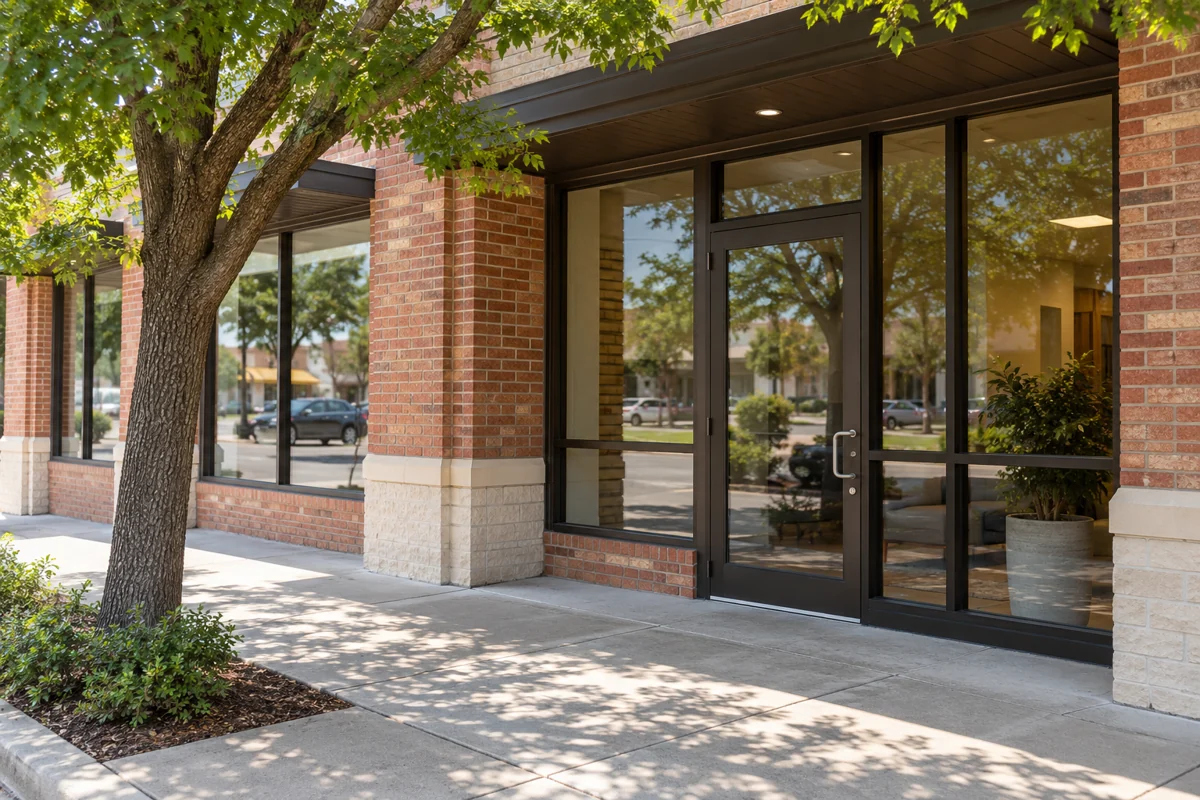
Start at the entrance
Wilmer's I-45 setting and intermodal transport connections make it a place where some addresses involve more than one gate or building. A nearby terminal or road junction may help you describe the general area, but the actual destination and approved access point matter more.
For an ordinary business-door problem, provide the company or unit name, the relevant entrance and an on-site contact. Then describe what happens when the authorized key is used. The commercial locksmith information is a starting point for that discussion; specific hardware and work still need confirmation.
Lost key or faulty lock?
If the key has disappeared but another key operates normally, your concern may be access rather than a mechanical fault. Explain who needs to retain access and whether the owner or property manager must approve a change. Do not assume that every tenant or employee can authorize alterations to a shared entrance.
If the key is present but sticks, describe the resistance without forcing it. Does the handle move? Does the bolt retract? Does pressure on the door change the symptom? Those details belong in a lock repair conversation, even when the first description was simply “the key does not work.”
Before you call
At home, say whether you are outside a locked door or already inside and planning a key change. For a car, have its make, model, year and exact parking position ready. Keys inside a locked vehicle and a missing programmed key are different requests, so name the problem directly.
Call 469-899-8795 to discuss the location and requested work. If your destination is farther south along the corridor, see the Ferris page and give the address there. A route you travel through is not a substitute for the city where the property or car is located.
- Address, building or unit, and the usable entrance.
- The key or lock symptom, rather than an assumed repair.
- Your connection to the property or vehicle and the authorized contact.